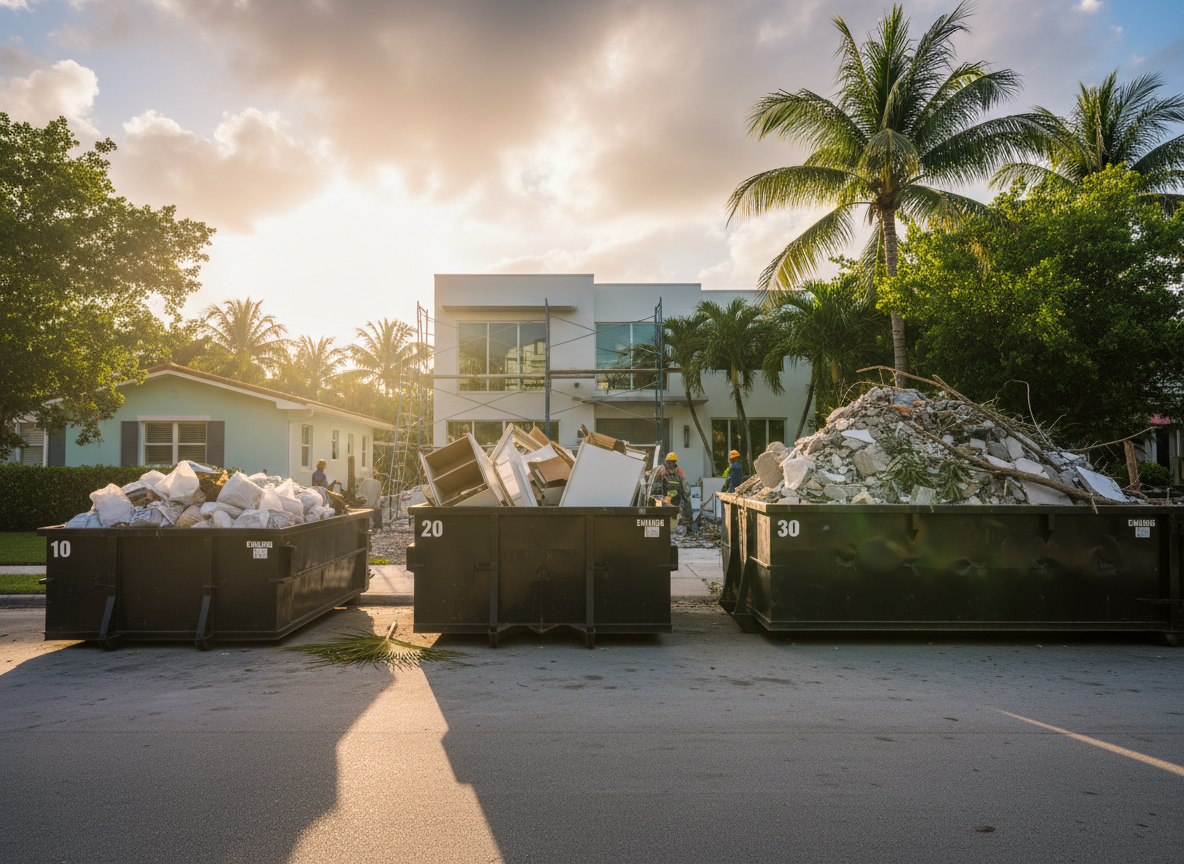
Cutler Bay homeowners often need dumpsters for kitchen remodels, garage cleanouts, and storm debris after the heavy summer rains that soak Miami-Dade County. Miami Dumpster Rental places units on driveways off SW 184th Street or Old Cutler Road, timing drops to avoid the afternoon downpours that turn soft limestone soil into mud. Trucks reach single-family homes built from the 1950s through newer subdivisions without blocking the two-lane residential streets that wind around lakes and canals.
We load roll-off containers at our 3147 NW N River Dr location and head south on US 1 to reach Cutler Bay before 6 pm weekdays or 2 pm Saturdays. Residential lots here frequently have mature trees and irrigation lines, so our drivers set bins on plywood or existing pavement to protect roots and avoid the drainage swales that run along many properties. This approach keeps projects moving whether you are clearing a backyard in the Lakes of the Bay area or handling a teardown near Franjo Park.
Tropical monsoon weather means we check forecasts daily and offer flexible swaps when a sudden storm floods a site. Many Cutler Bay streets sit close to the water table, so we recommend shorter rental periods during wet season to prevent containers from shifting on saturated ground.
Around Cutler Bay
We regularly work near:
- 📍Franjo Park
- 📍Cutler Bay Senior High School
- 📍US Highway 1
- 📍Saga Bay Park
- 📍SW 184th Street
- 📍Cutler Ridge Park
Dumpster Rental in Cutler Bay — Local Notes
- •Older Cutler Bay homes on larger lots often have narrow driveways or carports that limit bin size to 10- or 15-yard units to stay clear of power lines and landscaping.
- •Heavy summer rains can fill drainage swales along SW 112th Avenue and Eureka Drive, requiring crews to place dumpsters on higher ground or use gravel boards.
- •Newer subdivisions near Saga Bay Park feature gated entries and tighter turns, so we send smaller trucks and confirm access the day before delivery.
- •Proximity to the canal system means some properties have soft shoulders; we inspect soil conditions on arrival to prevent trucks from getting stuck during wet months.