2026-10-27 · Javier Morales
Handling Storm Debris With A Dumpster In Miami During Hurricane Season
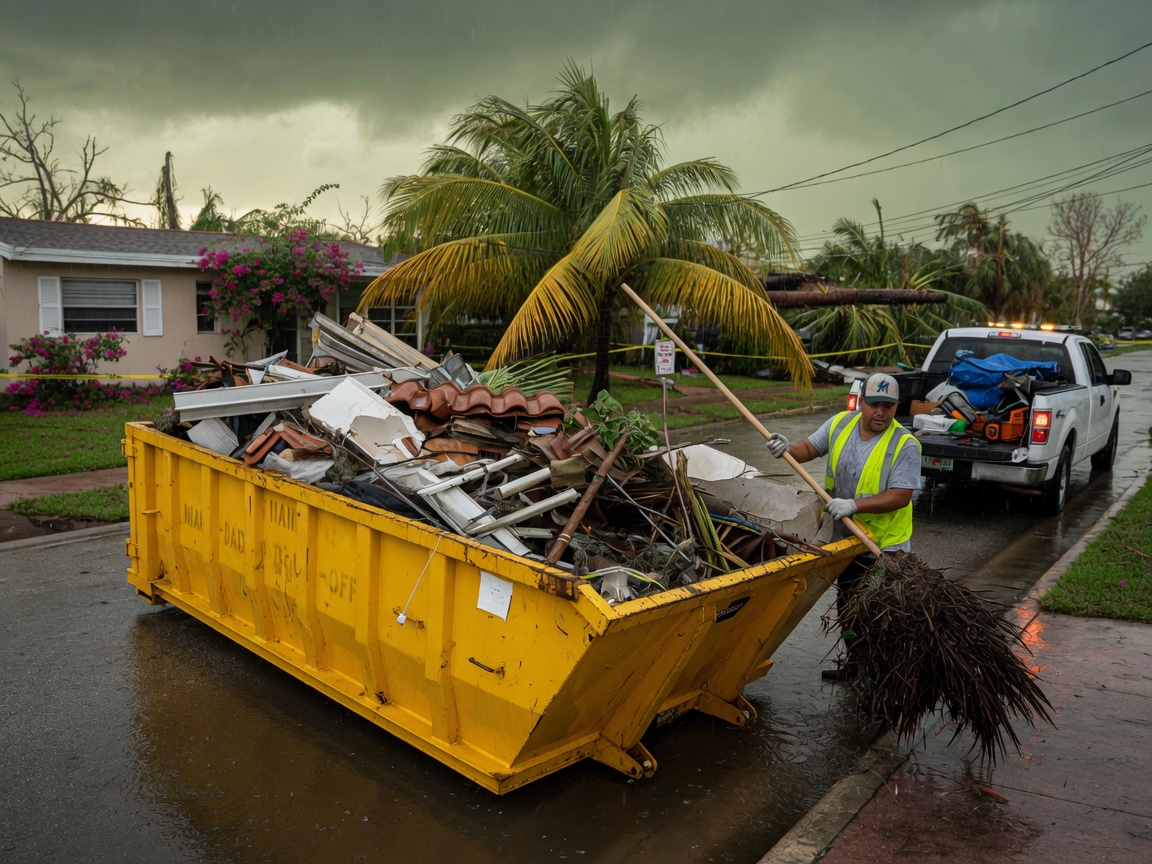
In Miami during hurricane season, a 20- to 30-yard dumpster rental placed on a driveway in neighborhoods such as Coconut Grove or Coral Gables can clear storm debris from a typical single-family home in 4 to 7 days when scheduled before landfall. Miami-Dade County properties often feature older concrete-block homes with tile roofs that shed large volumes of broken tiles, palm fronds, and saturated insulation after high winds and flooding. The hot wet summers accelerate mold growth on wet drywall and furniture, so prompt removal prevents secondary damage inside Brickell condos and Wynwood warehouses alike.
Miami's Hurricane Season Debris Profile
Miami-Dade County sees peak storm activity from June through November, when afternoon thunderstorms and tropical systems drop 6 to 10 inches of rain in hours. This saturates soil around older homes in Overtown and Little Havana, loosening tree roots and pulling down power lines along with branches. Roofing debris from 1960s-era ranch houses mixes with yard waste and flooded appliances, creating loads that weigh more than dry construction waste. Homeowners in Design District lofts and Downtown Miami high-rises face additional challenges moving material down elevators or across narrow alleys before city crews arrive.
Terrain near the Miami River and Biscayne Bay means many lots sit on fill or limestone, so heavy dumpsters can sink if not placed on plywood or gravel. Wet debris also compacts poorly, requiring more frequent hauls than during dry-season renovations. Local crews note that debris piles left longer than 72 hours in Coral Gables or Coconut Grove attract rodents and violate county nuisance rules.
Selecting and Positioning a Dumpster for Storm Work
Roll-off containers work best for mixed storm loads because their low sides allow easy loading of long branches and bulky furniture. In residential zones of Hialeah or Miami Beach, a 20-yard unit fits most driveways without blocking sidewalks. Larger 30- or 40-yard units suit corner lots in Kendall or West Miami where multiple trees came down. Always check overhead power lines and keep the container at least 10 feet from storm drains to avoid runoff violations.
Placement on crushed limestone or plywood protects the soft limestone base common in Miami-Dade County yards. In areas with narrow streets like parts of Little Havana, schedule delivery for early morning before traffic builds. After the storm, prioritize roofing and large limbs first so the remaining volume fits without overfilling.
Step-by-Step Debris Removal After Landfall
- Walk the property the morning after the storm and separate hazardous items such as broken glass, treated lumber, and appliances containing Freon.
- Load heavier materials at the bottom and lighter branches on top to maximize weight distribution.
- Cover the load with a tarp if rain continues, preventing additional water weight.
- Call for pickup once the container reaches 80 percent capacity to avoid extra fees.
These steps keep work moving while respecting Miami-Dade County right-of-way rules that limit how long containers can remain on public streets.
Continuing Your Cleanup Planning
For homes that sustained interior water damage, follow up with a Residential Dumpster Rental sized for drywall and carpet removal. Readers planning larger renovations after the storm can consult the Dumpster Rental Size Guide For Miami Home Renovations to match container capacity to project scope. Properties in Miami Beach often need extra attention to salt-air corrosion on metal debris. If permits are required for extended placement, review How To Get A Dumpster Permit In Miami Dade County before the next system approaches. Miami Dumpster Rental at 3147 NW N River Dr Ste 2 remains available Mon–Fri 8am–6pm and Sat 9am–2pm to coordinate post-storm schedules.